
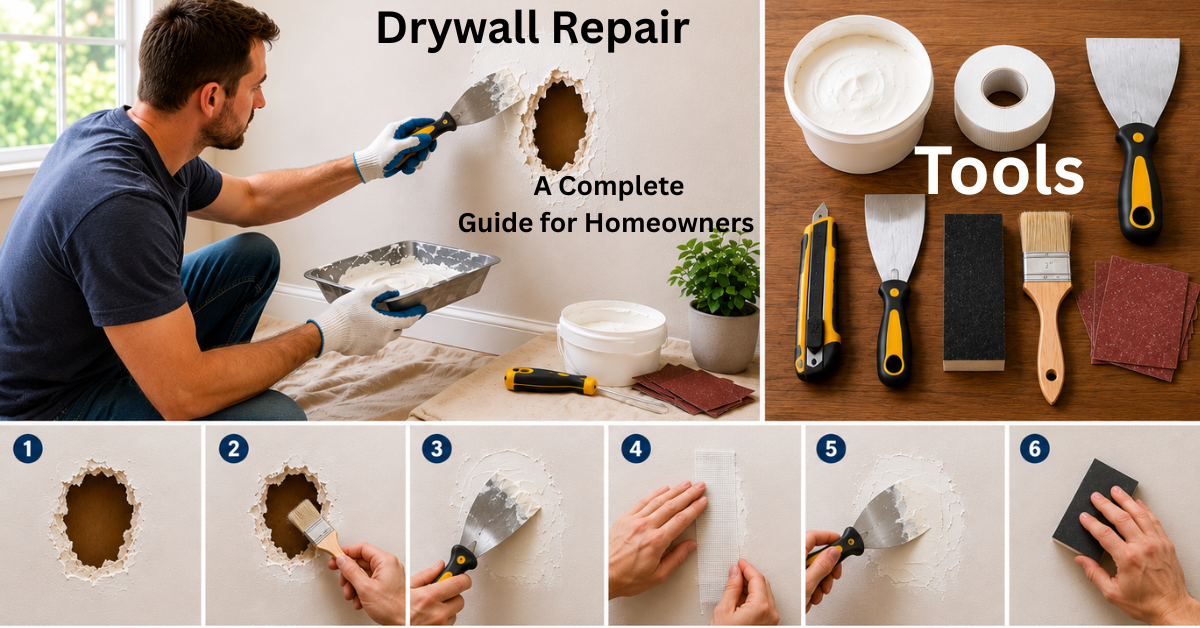
Drywall repair involves fixing damaged areas of your home. Walls get damaged for many reasons. You may notice holes, dents, cracks, or marks on the wall. Some repairs are simple enough to do yourself without calling a contractor. This guide provides information on repairing all types of damage, ranging from large drywall holes caused by moving furniture to small holes left by nails.
One good thing is using this guide minor drywall issues a few simple tools can help to repair the wall whether dealing with you may not need to hire someone for small repairs
What is Drywall Repair?
Drywall repair generally involves fixing damaged walls or ceilings in a home. Drywall is widely used in typical American homes. If holes or cracks in the drywall are not repaired promptly, the home’s neat and attractive appearance is compromised. You can patch the drywall yourself or hire a professional company; it is a very simple task.
Some common drywall issues include:
- Small holes
- Nail marks
- Narrow or wide cracks
- Dents or depressions
- Marks made by children
These issues should be repaired immediately.
Common Types OF Drywall Repairs
Damage can range from minor to severe.
Small Nail Holes
Repairing this type of drywall damage is simple; anyone can do it. First, fill the nail hole with spackle.
Dents and Scratches
Minor dents are common in busy households.
The damaged area can be filled with a small amount of joint compound. Once dry, sand it smooth and repaint.
Small Cracks
Fine cracks often appear as a house settles after construction. First, slightly roughen the crack. Apply drywall compound and let it dry.
Large Holes
When a hole is large, cut out the damaged drywall and patch the opening by installing a new piece.
It may take some extra effort, but the results are worth it.
Essential Tools for Drywall Repair
It is essential to purchase certain necessary tools to repair the wall. The specific type of drywall determines the tools you will need. Here are some Tools many homeowners keep on hand:
- Putty knife
- Sandpaper
- Drywall patch
- Joint compound
- Utility knife
- Drywall tape
- Paintbrush
- Paint roller
- Dust mask
You can find most of these at a local hardware store. For small cracks and holes, you probably won’t need anything fancy.
How to Fix Small Holes in Drywall
Repairing small holes in a wall is one of the easiest tasks and can usually be completed in less than an hour.
Take a look at the damage first.
Before you do anything, check how bad the hole is. A tiny nail hole is a lot different from a hole someone accidentally punched in the wall.
Get rid of the loose stuff.
If there are any broken or loose pieces around the hole, pull them off. You want a clean area to work with.
Fill it in.
Grab some spackle and a putty knife. Push the filler into the hole and smooth it out as best you can.
Let it sit for a while.
Now leave it alone and let it dry. A lot of people rush this step and end up making a bigger mess.
Sand it down.
Once it’s dry, lightly sand the area until it feels smooth. Run your hand over it—you’ll usually feel bumps before you can see them.
Clean up the dust.
Sanding creates dust everywhere. Wipe the wall with a damp cloth so the paint will stick properly.
Touch up the paint.
Use the same paint that’s already on the wall. If you still have the original paint can, even better.
Step back and check your work.
Look at the wall from different angles, especially near a window or bright light. If you notice a bump or rough spot, sand it again and touch it up.
That’s it.
For most small drywall holes, the whole job takes less than an hour of actual work. The longest part is usually waiting for the filler and paint to dry.
Dealing With Water-Damaged Drywall
Water damage differs from holes caused by nails or impacts from objects. If the drywall has gotten wet, do not rush to repair it immediately.
First, you need to identify the source of the water; otherwise, you might have to repair the same area again in a few weeks.
A small roof leak that went unnoticed
A leaking pipe inside the wall
Too much moisture from a bathroom or laundry room
Water getting in around old windows
Once you’ve stopped the leak, take a close look at the drywall. If it’s soft, swollen, crumbling, or stained, that section will probably need to be cut out and replaced.
A lot of homeowners try to paint over water stains and hope for the best, but that rarely solves the problem. If moisture is still trapped behind the wall, mold can start growing before you even realize it.
Once you’ve taken care of the leak, fixing the drywall is usually the easy part. Cut out any drywall that’s been damaged, make the repairs, and let everything dry completely before you even think about painting.
Conclusion
The good news is that most drywall repairs aren’t nearly as difficult as they seem. In most cases, a small hole, crack, or dent can be fixed with a few basic tools and a little patience.
I’ve found that a lot of homeowners put off minor repairs because they think the job will take longer than it actually does. What usually happens is that a small problem gets worse over time and ends up requiring more work than it would have in the first place.
Whether you decide to handle the repair yourself or call a professional, the important thing is not to ignore the damageaking care of drywall damage early is one of those small jobs that can make a big difference. What starts as a tiny crack or hole today can easily turn into a larger Drywall repair if it’s left alone for too long.